Deciding how often your child should attend online piano lessons is one of the first practical choices you’ll make as a parent. Choose too few lessons and progress can stall; choose too many and schoolwork or motivation may suffer. This guide explains sensible lesson-frequency options for different ages, realistic practise expectations, signs a schedule needs changing, and how to evaluate the best approach for your child.
Quick answer: a sensible starting point
The most common and sensible starting point for most young learners is one 60-minute lesson per week combined with short, regular practise sessions at home. If your child is very young, newly starting, or balancing a busy school and activity schedule, once a week usually gives steady progress without overload. For motivated older beginners or children preparing for exams or performances, two lessons per week can accelerate development.
Why lesson frequency matters
- Skill retention: Regular instructional input helps consolidate technique and musical understanding between home practise sessions.
- Motivation and focus: A rhythm of lessons and practice creates clear short-term goals and keeps interest steady.
- Practice structure: Lessons teach what to practise; without them, practise sessions can be unfocused.
- Time management: Lessons need to fit with school, homework and other activities—practical schedules win.
How many lessons per week? Age-based recommendations
Different ages and temperaments respond to different schedules. The following are practical recommendations you can adapt to your child.
Age 5–7: foundation and enjoyment
Recommended: 1 lesson per week (60 minutes)
Young beginners are building concentration, co‑ordination and basic musical habits. One weekly lesson gives professional guidance while leaving time for short, daily practise sessions (see practise section). Lessons should prioritise fun, simple repertoire and fundamental technique.
Age 8–10: steady progress
Recommended: 1 lesson per week; consider 2 if motivated or preparing for a performance
Children at this stage can sustain longer practice blocks and absorb more musical concepts. One lesson per week remains a sensible baseline. Move to two lessons if the child is highly motivated, learning theory alongside practical work, or aiming for exams within a short timeframe.
Age 11–13: consolidation and faster advancement
Recommended: 1–2 lessons per week depending on goals
Older children who practise consistently can benefit from two lessons per week, particularly if they are tackling challenging repertoire, exams or ensemble work. Two lessons allow the teacher to correct technical issues quickly and introduce more advanced material.
How practice time links to lesson frequency
Lesson frequency must match home practise. A lesson without regular practise is unlikely to produce reliable progress. Use these practice benchmarks as a guide:
- Age 5–7: 10–15 minutes daily, 5–6 days a week
- Age 8–10: 15–30 minutes daily, 5–6 days a week
- Age 11–13: 30–45 minutes daily, 5–6 days a week
When a child has two lessons per week, aim to use the extra lesson to introduce new material that the next few practising days will reinforce. For example, alternate focus between technique and repertoire across the week so practise sessions remain varied and productive.
Signs your current lesson frequency is working
- Your child retains material from one lesson to the next and shows steady improvement in pieces and technique.
- Practice sessions are focused and generally completed without excessive nagging.
- Lessons challenge the child without causing frustration or resentment.
- Goals set by the teacher (new piece sections, technical targets) are regularly met.
When to increase or decrease lessons
Consider increasing to two lessons a week if:
- Your child is preparing for an exam, concert or competition within a short timeframe.
- Progress has plateaued despite regular, focused practise.
- Your child is especially motivated and enjoys practising.
Consider reducing frequency or pausing one lesson if:
- School commitments or other activities are overwhelming and practise drops dramatically.
- Your child shows signs of burnout or strong resistance to practising.
- The current lesson tempo is causing perpetual frustration rather than steady progress.
Practical tips to get the most from lessons and practise
- Make a short daily plan: 3 clear tasks per practice (warm-up, technique, piece) keeps sessions focused.
- Keep practice consistent: Short, daily practice is usually more effective than occasional long sessions.
- Use the lesson to set weekly goals: Ask the teacher for 2–3 specific things to practise before the next lesson.
- Record progress: A simple practice log helps identify what works and whether lesson frequency is appropriate.
- Protect lesson time: Treat lessons as appointments—consistent attendance matters for momentum.
Online lessons: what to expect and how they affect frequency
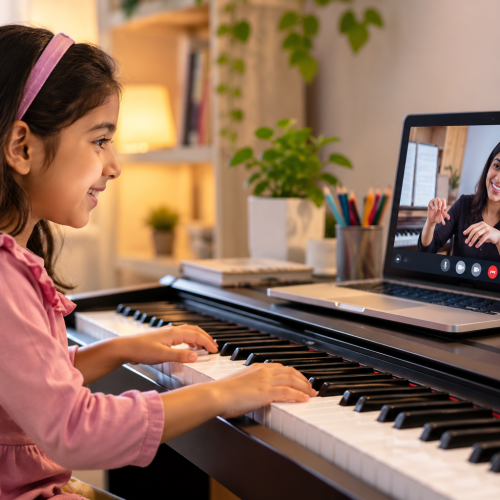
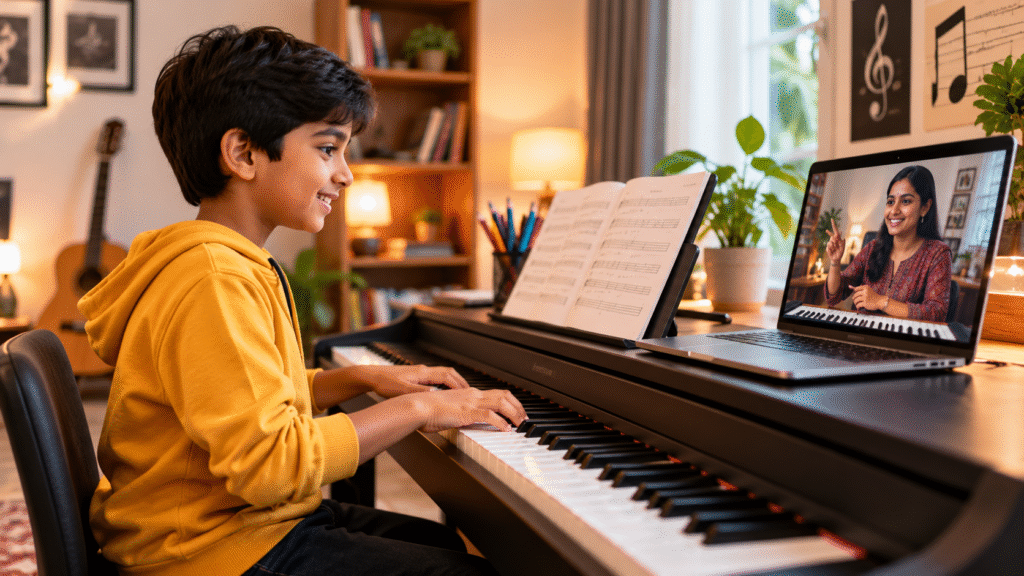
Live 1-to-1 online lessons deliver the same pedagogical advantages as in-person tuition—tailored feedback, structured progression and accountability—while fitting more easily into family routines. With quality online lessons, the same frequency guidance applies: one 60-minute weekly lesson is a sensible starting point for most learners, with two lessons a week for faster progress or performance preparation.
For parents considering an online programme, look for flexible scheduling, clear trial options and short payment cycles so you can test a frequency without a long-term commitment.
How Sound Garage fits this approach
Sound Garage offers 60-minute live 1-to-1 online music classes suitable for learners across ages. Lessons are paid in blocks of four classes; the next payment becomes due only after those four classes are completed. Missed or rescheduled classes do not count as completed classes. There is no long-term payment commitment beyond the current 4-class cycle, and a free trial lesson is available if you want to try a lesson before deciding on frequency.
If you want to explore tailored options for your child’s schedule and goals, consider a trial to see whether one or two lessons a week fits your family routine and your child’s motivation. Learn more about Sound Garage’s piano programme here: online piano lessons for kids. You can also review whether weekly 60-minute lessons suit your child and, if helpful, discuss increasing to two lessons for faster progress: online piano lessons for kids.
Common mistakes parents make
- Expecting rapid progress without establishing a regular practice habit.
- Scheduling lessons too close to major school deadlines or sports events.
- Switching teachers or lesson frequency too frequently—consistency matters.
- Using lessons as a substitute for home practice; they should complement each other.
Next steps for parents
- Decide on a starting rhythm: begin with one 60-minute lesson per week plus daily practice, then reassess after 6–8 weeks.
- Set simple weekly goals with the teacher and keep a short practice log to monitor progress.
- If progress stalls or your child’s goals change, discuss increasing to two lessons per week for a trial period.
FAQs
How many times a week should a beginner take piano lessons?
For most beginners, once a week is a good starting point. Combine the lesson with short daily practice sessions. Increase to twice weekly only if the child is motivated, preparing for performance, or not making expected progress.
Is a 60-minute online lesson too long for a young child?
Young learners often manage 60 minutes with the right teacher approach—lessons that mix technique, repertoire and games. If attention wanes, discuss segmenting the lesson into focused activities with the teacher.
Can my child progress with only one lesson per week?
Yes. Many students make steady progress with one weekly lesson plus regular, focused practise. Progress speed depends on practise quality and the child’s age and goals.
How soon should I consider adding a second lesson each week?
Consider a second lesson when the child is preparing for an exam or performance, when progress has plateaued despite good practice, or when the child requests more tuition and enjoys practising regularly.
Are online lessons as effective as in-person lessons?
Live 1-to-1 online lessons can be equally effective if the teacher provides clear guidance, uses good audio/video setup, and sets practice tasks. Online lessons also offer scheduling flexibility which can help maintain consistent frequency.
Deciding how often your child should take online piano lessons is a practical balance between goals, motivation and available time. Start with one 60-minute lesson per week, establish consistent practice, then reassess after a couple of months. If you’d like to try a lesson before settling on a rhythm, Sound Garage offers a free trial lesson and flexible 4-class payment cycles that make testing different frequencies straightforward.