Finding a good teacher makes lessons enjoyable and keeps your child practising. This guide explains how to evaluate an online piano teacher so you can book a trial lesson with confidence. You will learn which credentials matter, what to look for in teaching style and equipment, a simple trial-class checklist, and a recommended next step.
Why choosing the right teacher matters
A teacher shapes a child’s early musical experience. The correct match helps your child stay motivated, build skills in a healthy sequence, and enjoy practice. The wrong match can lead to frustration, slow progress, or lost interest—especially in the 6–13 age range when attention and motivation change quickly.
How to choose the right online piano teacher
Use these practical criteria to compare options before you book a trial.
1. Credentials and relevant experience
- Teaching experience: Prefer teachers with explicit experience teaching young learners rather than only concert performers. Experience with children indicates they know how to break concepts into small, engaging steps.
- Formal training or certification: Conservatoire grades and music teaching qualifications can be useful, but are not the only indicator of quality. Ask how their training informs lesson planning and assessment.
- Style familiarity: If you want classical, pop, or exam-focused lessons, check that the teacher has demonstrable experience in that style.
2. Teaching style and lesson structure
Children respond best to clear structure with variety. Ask the teacher to explain a typical 60-minute lesson (note: Sound Garage offers 60-minute 1-to-1 live online classes). Useful elements include warm-ups, new material, sight-reading or repertoire time, and a short goal for home practice.
- Age-appropriate methods: Look for lessons that use games, short pieces and positive reinforcement for younger learners.
- Assessment and goals: A good teacher sets measurable short-term goals (for example, learn a simple piece in four lessons) and reviews them regularly.
- Progress reporting: Ask how they communicate progress to parents—short weekly notes, occasional recordings, or term reviews are common approaches.
3. Technical setup and materials for online lessons
Online lessons depend on good audio and a clear camera view. Before committing, check these points:
- Audio quality: Does the teacher use a good microphone and explain how they handle sound? Clear audio is essential for tone, rhythm and feedback.
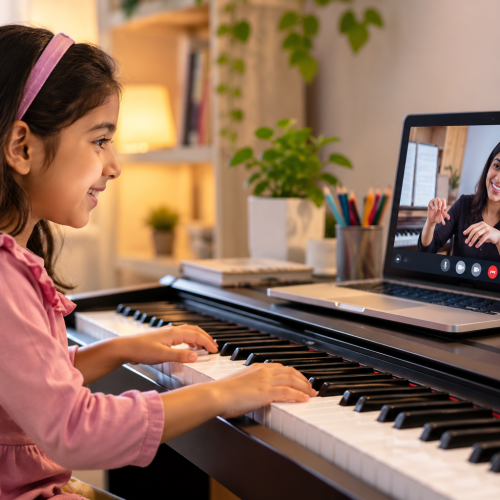
- Camera position: A camera showing the keyboard and the student’s hands helps the teacher correct posture and fingering.
- Materials and platform: Ask whether they use shared PDFs, screen-sharing, annotated scores, or interactive apps. Make sure the teacher can send learning materials after the lesson.
4. Personality and rapport
Personality fit matters as much as credentials. During a trial, notice whether the teacher:
- Explains things in simple, encouraging language.
- Balances praise with gentle correction.
- Adapts activities quickly if your child loses focus.
If your child feels comfortable and looks forward to the class, that’s a strong sign the match could work long term.
5. Availability, lesson length and payment terms
Confirm practical policies before you book recurring lessons. Key questions include session length, scheduling flexibility, and payment cycles. For example, Sound Garage runs live 1-to-1 online classes that are 60 minutes long; students pay for four classes at a time, and the next payment becomes due after those four classes are completed. Missed or rescheduled classes do not count as completed classes, and there is no long-term payment commitment beyond the current four-class cycle.
What to look for in a trial lesson (trial-class checklist)
Use a trial lesson to assess teaching quality and fit. Bring this checklist to the trial or observe while your child takes it.
- Warm welcome: Did the teacher make your child feel at ease in the first five minutes?
- Clear structure: Was the lesson paced with short, achievable tasks?
- Concrete feedback: Did the teacher give specific, actionable corrections (for example, “try curved fingers on beats one and three”)?
- Engagement techniques: Were games, simple improvisation or favourite tunes used to keep interest?
- Parent communication: Did the teacher explain what to practise and how much time to set aside?
- Technical smoothness: Was audio and video clear, and did the teacher manage the online tools confidently?
During the trial, explicitly ask the teacher for a short practice plan for the next week and a demonstration of one technique they expect your child to follow.
Common mistakes parents make when choosing a teacher
- Focusing only on qualifications: A highly qualified player may not be the best teacher for a young beginner.
- Expecting instant results: Progress in foundational skills takes steady practice; look for a teacher who sets realistic milestones.
- Ignoring logistics: Frequent rescheduling or poor audio will erode lesson value, even with a great teacher.
When to change teacher
Consider changing if your child consistently dislikes lessons after a reasonable adjustment period, if progress stalls despite good practice, or if communication and scheduling issues persist. Try a different teacher or a short break, but always communicate concerns clearly with the teacher first—many issues can be resolved with small changes in approach.
Practical next step
Start by booking one or two trial lessons with different teachers and use the checklist above to compare. If you prefer a structured, live 1-to-1 online format and want to try a lesson without commitment, Sound Garage offers a free trial lesson and 60-minute 1-to-1 live online classes. You can learn more about booking an online piano teacher through their piano page.
After trials, choose the teacher who combines clear structure, warm rapport and reliable technical delivery. If you decide to continue, note payment terms: with Sound Garage you pay for four classes at a time and the next payment is due after those four classes are completed. Missed or rescheduled classes do not count as completed classes, and there is no long-term commitment beyond the current four-class cycle. If you’d like to try a teacher recommended for young learners, see the online piano teacher page to book a trial.
Frequently asked questions
How long should an online piano lesson be for a child?
For many children aged 6–13, 45–60 minutes is effective. Shorter lessons can work for younger beginners, but a 60-minute one-to-one lesson provides time for warm-up, new material and guided practice. Sound Garage offers 60-minute 1-to-1 live online classes.
Can an online piano teacher teach technique and posture effectively?
Yes. A good teacher uses clear camera angles, verbal cues and demonstration. They will break technique into small steps and monitor progress over several lessons. Ask about camera positioning and how the teacher reviews hand posture during the trial.
What should a parent do between lessons?
Support short, regular practice sessions (10–20 minutes for many young learners), help set up the instrument and provide encouragement. Follow the teacher’s practice plan and check in weekly on goals rather than trying to teach technique yourself unless you have musical training.
Is there a risk that online lessons are less personal than in-person lessons?
Quality online lessons are highly personal when they are one-to-one and the teacher manages engagement well. The teacher’s ability to adapt, give clear instructions and use the camera effectively determines how personal and productive the lesson feels.
How many trial lessons should I book before choosing?
One trial lesson can reveal a lot, but two trials—ideally with different teachers—gives a better comparison. Use the trial-class checklist to make decisions based on structure, rapport and technical delivery.