Clear, practical guidance for parents on lesson frequency, age-based schedules, daily practise times and signs your child’s piano timetable is working.



Clear, practical guidance for parents on lesson frequency, age-based schedules, daily practise times and signs your child’s piano timetable is working.
A practical, parent-focused guide to evaluating and choosing an online piano teacher for your child—credentials, teaching style, tech checklist and trial-class questions.
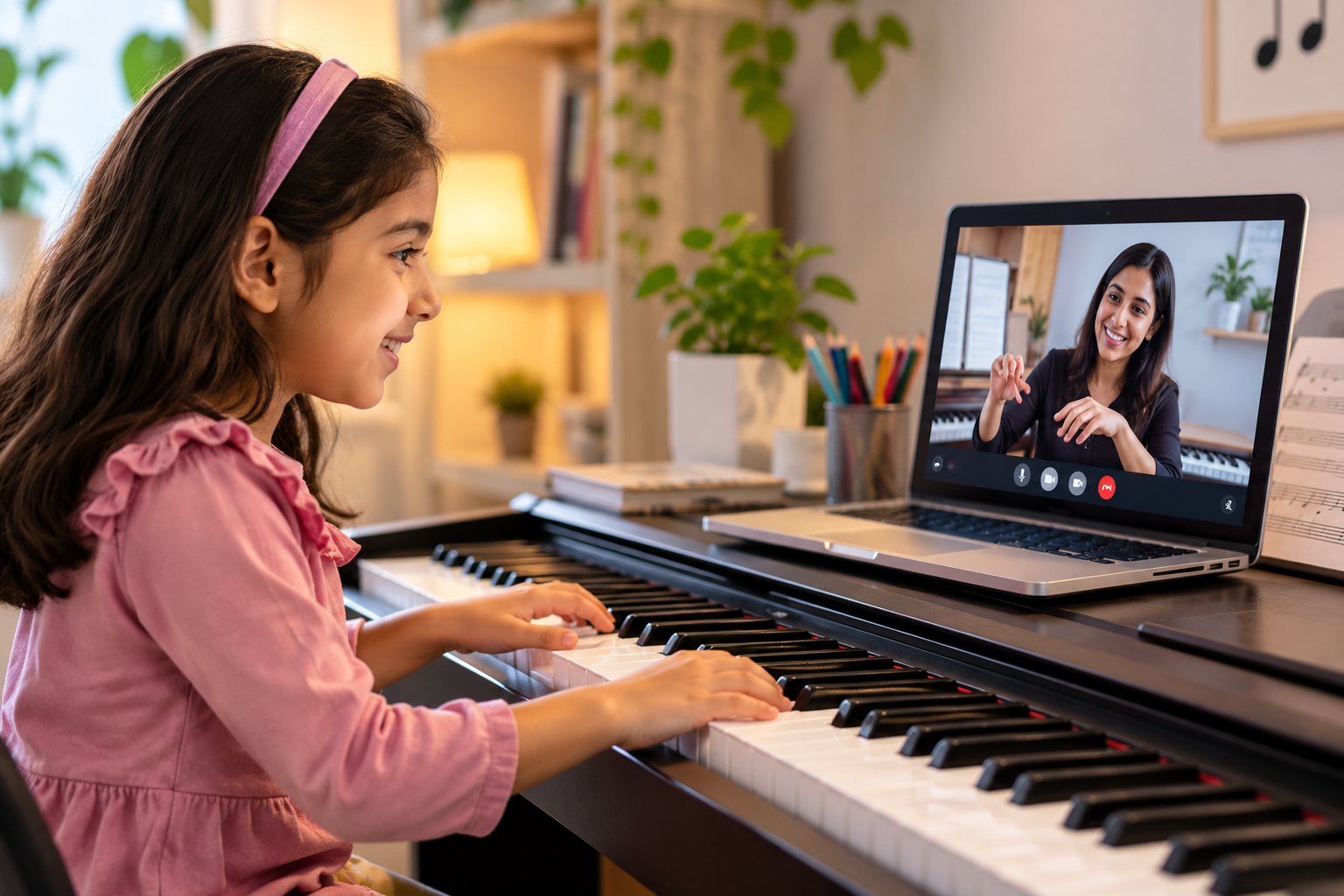
Choosing the right online piano classes for a child involves more than simply finding a convenient lesson time. The teacher, lesson format, learning structure and approach to practice can all affect how a child experiences music and progresses over time. With so many online piano lessons available, it can be difficult for parents to know what actually matters. Here are the key things to consider when choosing online piano classes for kids. Look at the Teacher, Not Just the Platform The teacher is one of the most important parts of a child’s learning experience. A good online piano teacher should be able to communicate clearly with children, demonstrate concepts effectively and adapt the lesson to the student’s current ability. When comparing programs, look at: • The teacher’s musical experience and qualifications• Experience teaching children• Whether lessons are live and interactive• How the teacher gives corrections and feedback• Whether the child works consistently with a teacher• How the teacher communicates practice expectations A strong teacher should be able to make the lesson understandable while also keeping the student engaged. Consider Online Piano Classes in a Live 1-to-1 Format Online music learning can take several forms, including recorded courses, group classes and live individual lessons. With a live 1-to-1 piano lesson, the teacher can see and hear the student while they play and respond immediately. This allows the teacher to: • Correct technique during the lesson• Identify mistakes as they happen• Adjust the pace of learning• Answer questions immediately• Choose exercises and repertoire appropriate for the student For parents considering online piano lessons for kids, it is worth understanding exactly how much live interaction the program provides. Look for a Structured Learning Path in Online Piano Classes A good program should make it clear how the online piano classes are structured and how the student progresses over time. Rather than simply learning one song after another, children can gradually develop several musical skills alongside their repertoire. Depending on the student’s level and goals, these may include: • Piano technique• Music reading• Rhythm• Musical expression• Repertoire• Ear training• Performance skills A structured learning path also makes it easier for parents to understand what their child is working towards. Choose a Program Appropriate for Your Child’s Level A beginner needs something different from a student who has already been playing piano for several years. For a beginner, the teacher may need to focus on fundamentals such as posture, basic technique, rhythm and reading music. An intermediate or advanced student may need more challenging repertoire, technical development and more detailed musical interpretation. When comparing piano classes for children, ask whether the program can adapt to the student’s existing level rather than following exactly the same path for everyone. Understand What Your Child Will Learn in Online Piano Classes Before enrolling, look beyond the list of songs included in a course. Ask what musical skills the student will develop. A well-rounded online piano education can involve: Technique — developing control and coordination at the instrument. Music reading — learning to understand and interpret written music. Rhythm — developing accurate timing and rhythmic awareness. Repertoire — learning and performing pieces at an appropriate level. Musical expression — learning how dynamics, articulation and phrasing affect a performance. Ear training — developing the ability to listen, recognise and respond to musical sounds. The exact balance will depend on the student’s age, level and goals. Consider How Much Practice Is Expected Piano lessons are only one part of learning an instrument. Regular practice between lessons is important for developing and retaining new skills. However, practice expectations should be realistic for the child’s age and schedule. Ask the teacher: • How much should my child practice?• What should they practice between lessons?• Will the teacher provide specific practice instructions?• How will practice progress be reviewed? A clear practice plan can make it easier for a child to develop a consistent routine. Look for Progress Tracking and Feedback The effectiveness of online piano classes also depends on what the student is expected to practice between lessons. This does not mean receiving a report after every lesson. Rather, there should be a clear understanding of what the student is learning, where they are progressing and what they need to work on next. Useful progress feedback can include: • Skills currently being developed• Pieces being learned• Areas that need improvement• Practice recommendations• Longer-term learning goals This is particularly useful with online piano lessons because parents may not always be able to judge their child’s technical progress themselves. Consider Your Child’s Long-Term Goals The right online piano classes should support the child’s goals as those goals develop over time. Some may simply want to enjoy playing music. Others may eventually want to perform, develop stronger musicianship or prepare for graded examinations. If examinations are part of your plans, ask whether the program can support structured exam preparation. For example, Sound Garage offers Trinity-aligned learning and exam preparation as part of its Trinity programs. The important thing is to choose a program that fits the child’s goals rather than assuming that every student needs to follow the same path. Compare the Practical Details of Online Piano Classes Once you have narrowed down your choices, compare the practical details. Look at: • Lesson duration• Lesson frequency• Scheduling flexibility• Teacher availability• Instrument requirements• Fees• Trial-class options• Rescheduling policies• How parents receive progress information These details can make a significant difference to whether a music program fits comfortably into your family’s routine. Take a Trial Lesson Before Committing A trial lesson can tell you much more than a website description. During the trial, observe how the teacher interacts with your child. Ask yourself: • Does my child feel comfortable communicating with the teacher?• Is the lesson structured?• Does the teacher explain things clearly?• Does the teacher correct mistakes constructively?• Is my child engaged?• Does the teacher explain what should be practised afterwards? The goal isn’t simply to determine whether the child can play something during the trial. It
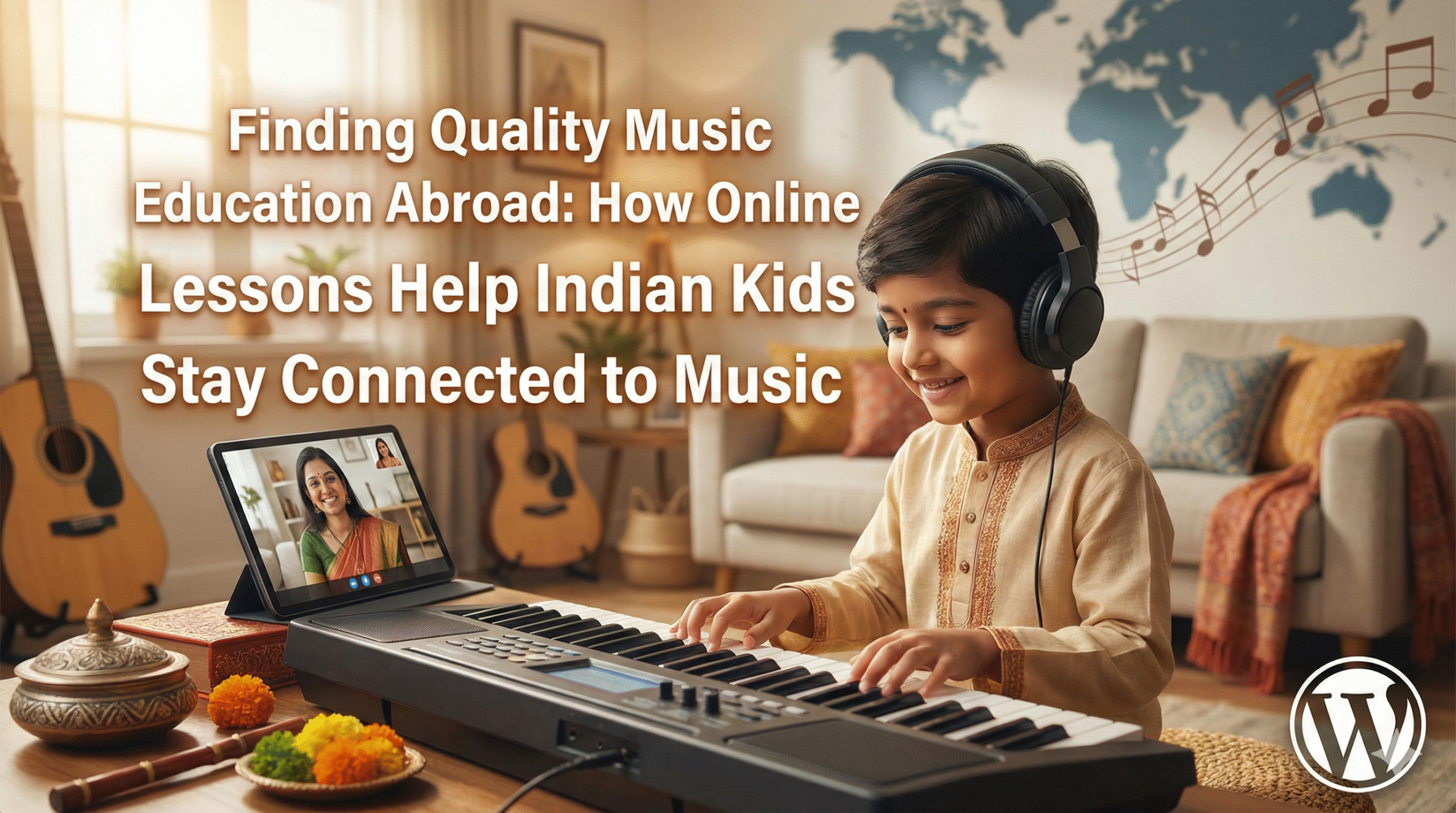
By Sound Garage • Updated 2025 • 6 min read Introduction If you’re an Indian parent living abroad — in Dubai, the UK, Canada, Singapore or anywhere else — you’ve probably asked yourself: “Where can my child learn good-quality music?”“Will they get the right foundation?”“Will they enjoy the learning experience?” You’re not alone.One of the biggest challenges Indian parents face abroad is finding a reliable, structured, child-friendly music teacher. And that’s exactly why thousands of families today are turning to online music lessons — not as an alternative, but as their first choice. Let’s explore why. Why Finding Good Music Education Abroad Is Difficult Music is one of the strongest ways children express themselves.But for parents living abroad, a few common challenges come up. 1. Lack of Structured Teaching Most parents prefer a systematic approach — especially one aligned with Trinity College London.However, not all local teachers abroad follow a structured syllabus. 2. Teaching Style That May Not Suit Indian Kids Some teachers focus only on Western pop or basic lessons.Indian children often respond better to: 3. Limited Availability of Trusted Teachers Even if you find a teacher, there are questions: 4. Time and Travel Constraints Between school, work, and other activities, driving your child to a class can become stressful and impractical — especially abroad. This is where online classes provide a refreshing solution. How Online Music Lessons Solve These Problems Online learning blends structured teaching with modern convenience, creating the perfect environment for children to learn confidently and consistently. Flexible Timings That Fit Your Life No travelling, no rushing, no waiting.Lessons take place in the comfort of your home, helping your child feel more relaxed and open to learning. One-on-One Attention Your child receives the full focus of their tutor.This leads to: Engaging and Interactive Learning Online classes today are designed to be fun, lively, and interactive.Children enjoy challenges, creative activities, and performance moments that keep them motivated. Trinity-Certified Tutors Who Understand Young Learners This is where Sound Garage makes a real difference. All our tutors are: Kids learn best with teachers they feel comfortable with — and this connection forms effortlessly in our sessions. What Makes Sound Garage Special for Families Abroad Sound Garage is built specifically for young learners and for parents who want a dependable learning structure. A Friendly, Modern Learning Atmosphere Children learn in a warm, supportive environment where they can express themselves freely. A Clear Trinity Pathway With Trinity-based teaching, your child gets: Parents especially love the clarity and future value this brings. Performance-Based Confidence Building Each month, children prepare short performances that help them: Confidence built at this age stays with them for life. Real Bonds with Tutors Our tutors understand children.They teach with patience, creativity, and genuine enthusiasm — and children naturally connect with them. What Parents Say “After trying local teachers abroad, nothing matched the structure and warmth of Sound Garage. My daughter looks forward to every class now.”— Parent from Dubai “We finally found a place that understands our child’s pace, personality, and musical goals. The progress has been incredible.”— Parent from the UK How Online Music Keeps Children Connected to Culture Even while living abroad, parents want their children to stay connected to their roots.Music is a beautiful way to achieve that. Online learning helps children stay connected to: This becomes a lifelong gift. Ready to Begin Your Child’s Musical Journey? The best way to understand the difference is to experience it.You can book a free demo class and see how your child responds. Book a Free Demo Class Suggested Related Articles About Sound Garage Sound Garage is an online music school built by performers, composers, and Trinity-qualified musicians. We help children aged 6–13 across the world learn music in a fun, structured, and modern way — from the comfort of home.
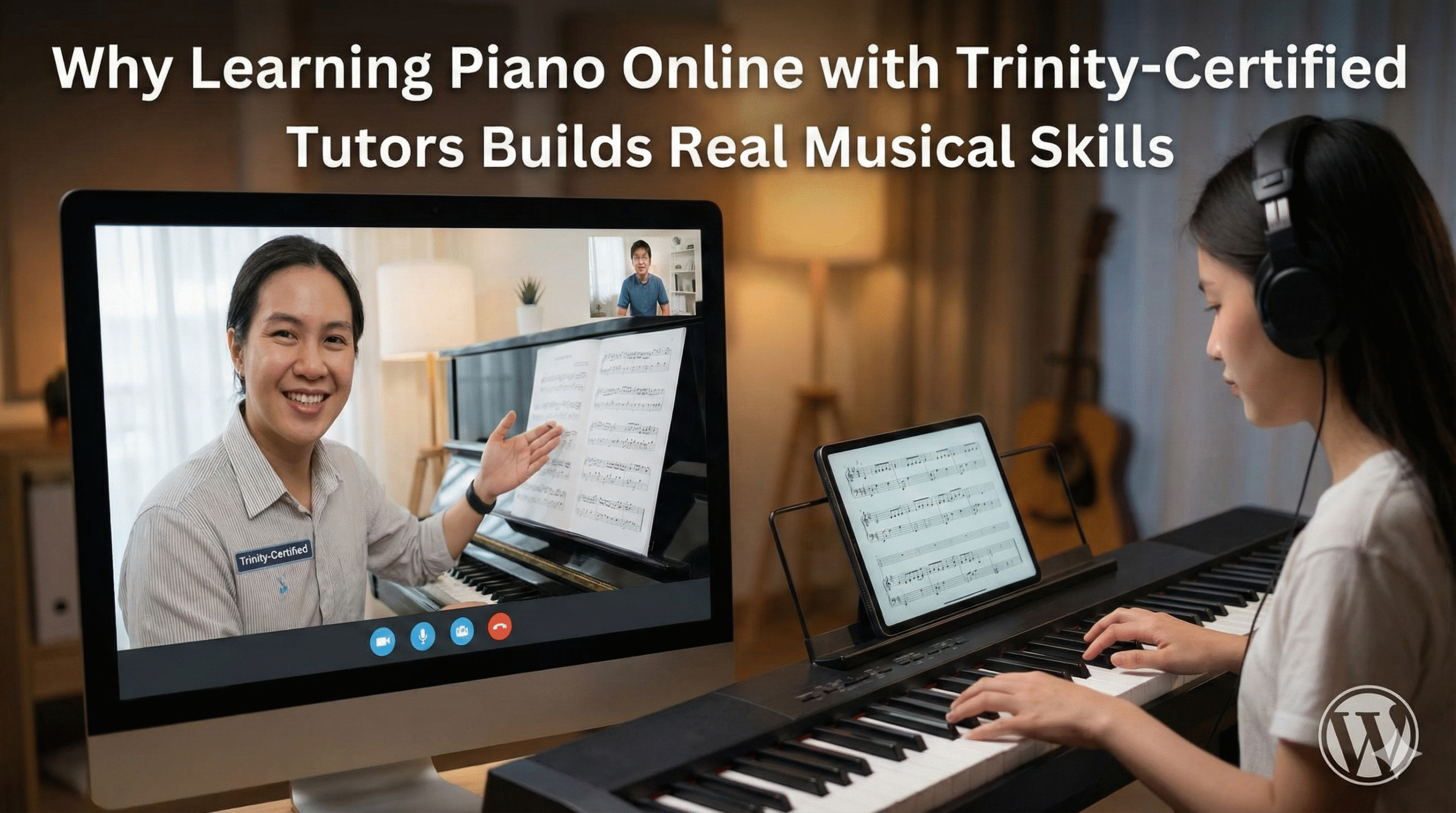
By Sound Garage • Updated 2025 • 7 min read Introduction Every parent dreams of seeing their child sit at the piano and play a piece with confidence, joy, and pride.But the path to real musical skill doesn’t happen by chance — it requires the right guidance, the right structure, and most importantly, the right teacher. For families abroad, finding a piano tutor who truly understands your child’s needs can feel challenging. Many parents wonder: “Will online piano lessons be as effective as in-person classes?”“Can my child build real technique and musical understanding online?”“Will the teacher be qualified?” The short answer is: yes — if the tutor is Trinity-certified and trained to teach young learners. Let’s explore why online piano lessons with Trinity-certified tutors have become the most reliable, structured, and effective way for children aged 6–13 to learn piano today. Understanding the Trinity College London Advantage Trinity College London is one of the world’s most respected music examination boards.Their graded system is designed to help children progress from complete beginners to confident, technically grounded piano players. Here’s why the Trinity pathway matters for your child: 1. A Clear, Step-By-Step Learning Structure Children thrive when the journey is clear.Trinity grades provide: This clarity keeps children motivated and parents fully aware of what’s next. 2. Recognized Internationally For parents abroad — especially in the UK, UAE, Singapore, and Canada — Trinity certificates carry significant value.They are recognized by: 3. Builds Real Technique, Not Just “Songs” Children don’t just learn to play tunes.They learn: These are the skills that create lifelong musicians. Why Online Learning Works Beautifully with the Trinity System Many parents are surprised to discover that online lessons are not only effective but often better than in-person classes — when taught by a trained, certified tutor. Here’s why: 1. Complete Focus and Individual Attention In online one-on-one sessions, the tutor is entirely focused on your child.There are no classroom distractions, no rush, and no split attention. This means: 2. Advanced Use of Technology Modern online lessons use tools that actually help learning, such as: Children today learn through visuals and interaction — online teaching is built for this. 3. Flexible, Comfortable Learning Environment Children learn best when they feel relaxed.Learning from home removes: Instead, children feel comfortable, open, and excited to play. 4. Parents Can Track Progress Easily Parents abroad often miss out on seeing what happens in physical classes.With online learning: This builds trust and clarity. Why Trinity-Certified Tutors Make All the Difference Not every piano teacher is the same — and qualifications matter. Teaching piano is not just about knowing how to play; it’s about: At Sound Garage, every piano tutor is: This combination is rare — and incredibly effective. What Your Child Gains from Learning Piano Online with a Certified Tutor Real Musical Foundation Your child develops: These are the essentials for lifelong musicianship. Consistency and Discipline Weekly structured lessons help children build: Parents often notice improvements in other areas of life too. Confidence and Performance Strength Children regularly perform pieces in class.Each small performance builds: Creativity and Self-Expression Piano is not just technical — it’s emotional.Kids learn to express feelings through music, which is incredibly powerful for self-esteem. What Parents Across the World Are Saying “The progress my son made in six months with Sound Garage was more than he made in two years with his previous tutor. The Trinity structure really works.”— Parent from London “Online lessons are so convenient. My daughter connects so well with her young tutor. She feels understood, supported, and excited to learn.”— Parent from Dubai “We wanted a teacher who could prepare our child for Trinity exams. Sound Garage was the perfect match.”— Parent from Singapore Why This Approach Works for Today’s Children Children today respond best to: Online Trinity-based piano lessons bring all these elements together — which is why the results are consistently strong. Ready to Help Your Child Build Real Musical Skills? If you’re considering piano classes for your child, the best way to understand the difference is to experience it yourself. You can book a free demo class and see how quickly your child connects with our teaching approach. Book a Free Demo Class Suggested Related Articles About Sound Garage Sound Garage is an online music school built by performers, composers, and Trinity-qualified musicians.We help children aged 6–13 across the world develop real musical skills through structured, fun, interactive online lessons.
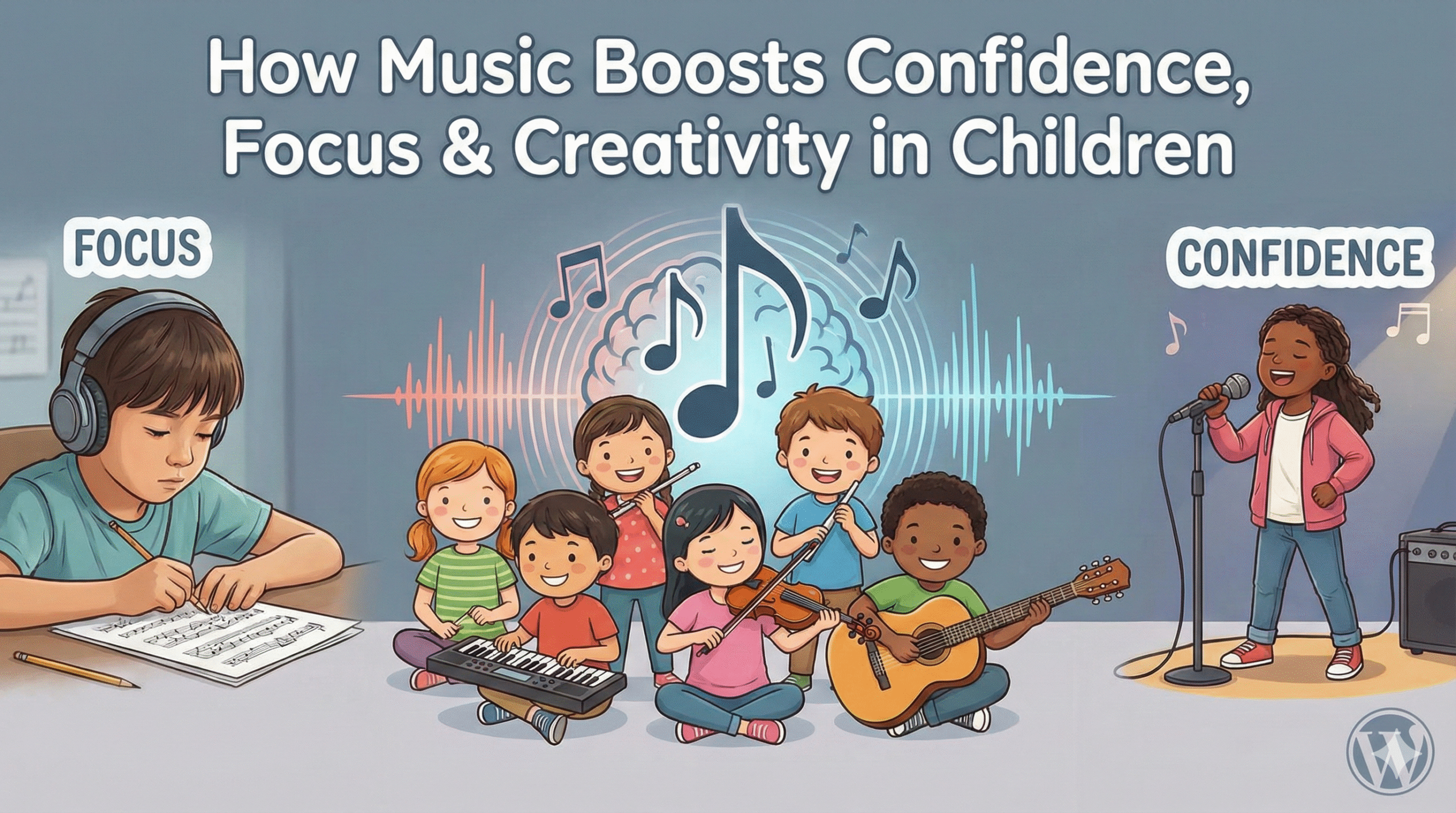
By Sound Garage • Updated 2025 • 7 min read Introduction Every parent wants their child to grow into a confident, expressive, and emotionally strong individual.But in today’s fast-paced world, with screens everywhere and academic pressure rising, children often lose the space to explore their creativity or build self-belief. This is where music becomes a gift — one that quietly shapes a child’s emotional and mental development in ways most parents don’t realize. For children aged 6–13, learning music is more than just playing an instrument.It strengthens their mind, nourishes their creativity, helps them focus better, and boosts their confidence from the inside out. Let’s explore how. 1. Music Builds True, Lasting Confidence Children feel confident when they can do something well — and music gives them countless opportunities to achieve small wins each week. Each step tells the child:“I can do this.” Over time, these consistent wins help children: Even shy children experience a remarkable transformation through music. 2. Music Improves Focus and Concentration Playing an instrument requires a child to do multiple things at once: This multi-layered activity strengthens the brain areas responsible for attention, memory, and concentration. Parents often notice improvements in: Music teaches the mind to slow down, process, and stay present — a rare skill in today’s distracted world. 3. Music Unlocks Creativity and Imagination Children naturally express themselves through movement, sound, and imagination.Music gives them a structured yet free space to explore all of this. When children learn music, they: Creativity is not just for artists — it helps in problem-solving, emotional balance, and innovative thinking.Music naturally develops this inner creative engine. 4. Music Strengthens Emotional Expression Children don’t always have the words to express their feelings, but they can express them through music. Music becomes a safe emotional outlet — a place where children feel calm, focused, and connected to themselves. This emotional grounding helps children: 5. Music Encourages Discipline and Responsibility Every time your child practices, they are learning discipline — without being forced into it. Music teaches: These are life skills that help children grow into more responsible, grounded individuals. 6. Music Builds Strong Memory and Brain Development Research shows that children who learn music develop stronger: The structured nature of music lessons — especially with graded systems like Trinity — creates a strong mental foundation. 7. Music Helps Children Feel Proud of Their Progress One of the most rewarding moments for a parent is seeing their child: These moments boost self-esteem in a powerful way. Children learn:“If I put effort into something, I can achieve it.” This becomes a core belief that shapes their approach to school, friendships, and life. Why Ages 6–13 Are the Best Time to Start Children in this age group: Starting early gives them a lifelong advantage — musically, emotionally, and mentally. How Sound Garage Supports Your Child’s Growth Sound Garage isn’t just a place to “learn songs.”It’s a nurturing space where children experience the full developmental benefits of music. Our approach is built on: Children don’t just learn music — they grow with it. Parents often tell us:“My child is more focused now.”“My daughter’s confidence has increased so much.”“My son expresses himself more openly.”“My child has become more disciplined.” These changes are real — and they last. Want to Help Your Child Build Confidence Through Music? If you’d like to see how your child responds to music learning, you can try a free demo class. A single session is enough to see: It’s a simple first step that could shape your child’s growth for years to come. Book a Free Demo Class Suggested Related Articles About Sound Garage Sound Garage is an online music school built by performers, composers, and Trinity-certified musicians.We help children aged 6–13 across the world grow in confidence, creativity, and discipline through structured, enjoyable online music lessons.
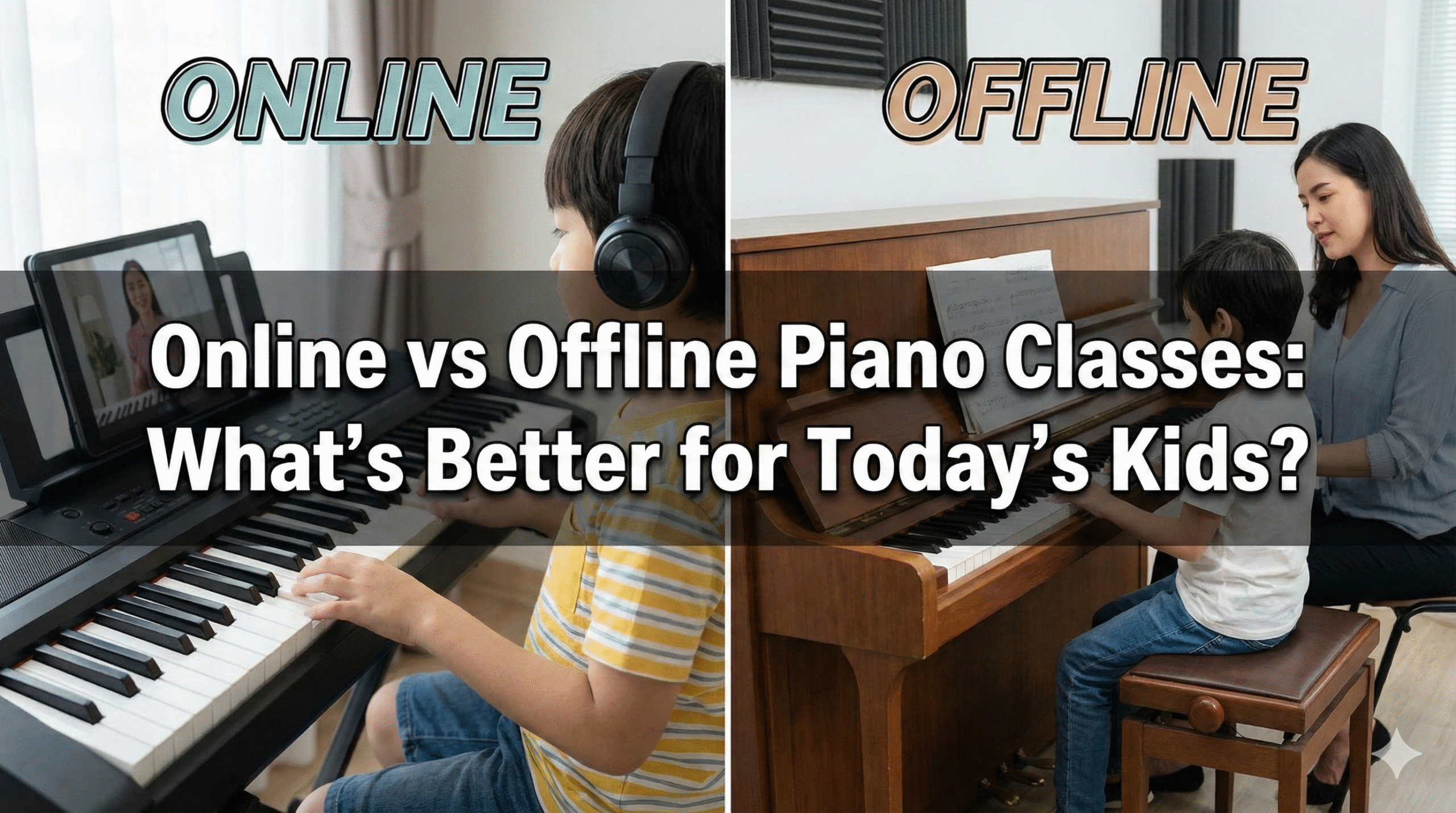
By Sound Garage • Updated 2025 • 8 min read Introduction If you’re considering piano lessons for your child, you’ve probably asked yourself: “Should I choose online or offline classes?”“Will online lessons be as effective as going to a physical class?”“Which one will help my child learn better, faster, and more confidently?” This is one of the most common questions parents ask us — especially Indian families living abroad in the UAE, UK, Canada, USA, or Singapore. The truth is simple:Both online and offline piano classes can work — but the best choice depends on your child’s learning style and your family’s lifestyle. Let’s break it down clearly so you can make the best decision. 1. Convenience and Flexibility Offline Classes Travelling to a physical music school used to be the norm.But it comes with challenges: For many parents abroad, this becomes overwhelming. Online Classes Online lessons remove all these barriers.Your child learns from home at a convenient time, allowing you to: For busy families, online learning often fits life much better. Verdict:Online is more flexible, easier to manage, and saves significant time. 2. Quality of Tutors Offline Classes You are limited to the tutors available in your area.Sometimes the teacher is excellent — sometimes not.And switching teachers can be difficult. Online Classes You can choose from a wider pool of qualified, Trinity-certified, performance-driven tutors — no matter where you live.Geography doesn’t restrict your child’s access to great teaching. At Sound Garage, every tutor is: Children connect faster with tutors who understand their mindset — something online platforms do exceptionally well. Verdict:Online classes give you access to better-quality tutors, especially important for families abroad. 3. Learning Environment Offline Classes Classrooms are structured but may feel intimidating for some children.Children may feel: Online Classes At home, children feel: Online classes create a warm, private learning environment where children can focus fully and learn at their own pace. Verdict:Children often learn better and feel more confident in online settings. 4. One-on-One Attention Offline Classes Many offline lessons have: Even in “private” offline lessons, the environment may be rushed or distracted. Online Classes Online classes are usually 100% one-on-one, meaning: This dramatically increases the effectiveness of each session. Verdict:Online clearly wins with consistent, personalised attention. 5. Focus and Concentration Offline Classes Travelling, waiting, and classroom distractions can affect focus.Children may take time to settle. Online Classes Online lessons are structured, fast-paced, and interactive.With fewer external distractions, children: The comfort of home reduces pressure and increases engagement. Verdict:Online fosters better concentration for most kids. 6. Parental Involvement and Visibility Offline Classes Parents usually wait outside and do not know: Online Classes You can: This level of involvement builds trust and clarity. Verdict:Online keeps parents more informed and involved. 7. Safety and Comfort Offline Classes Travelling, unfamiliar locations, and external environments can feel stressful. Online Classes Children remain at home in a familiar, safe setting.This is especially reassuring for: Verdict:Online feels safer and more comfortable for young children. 8. Cost and Value Offline Classes Costs may include: Online Classes You pay only for the class — and receive: Verdict:Online offers stronger value for the quality delivered. So Which Is Better? Online or Offline? The answer depends on what you want for your child. Choose offline if: Choose online if: For most modern families — especially Indian families abroad — online piano classes offer more convenience, better quality, and faster progress. Why Families Choose Sound Garage for Online Piano Lessons At Sound Garage, children receive: Children don’t just learn piano — they build confidence, creativity, and discipline. Parents consistently tell us:“My child has become more focused.”“My child’s confidence has grown tremendously.”“Our daughter connects beautifully with her tutor.”“We’ve seen more progress online than in offline classes.” Ready to See Which One Your Child Prefers? The easiest way to decide is to let your child experience an online class.You’ll know within minutes whether it’s the right fit. You can try a free demo class — no pressure, no obligation. Book a Free Demo Class Suggested Related Articles About Sound Garage Sound Garage is an online music school founded by performers, composers, and Trinity-certified musicians.We help children aged 6–13 across the world learn piano, keyboard, guitar and vocals with confidence, creativity, and joy.