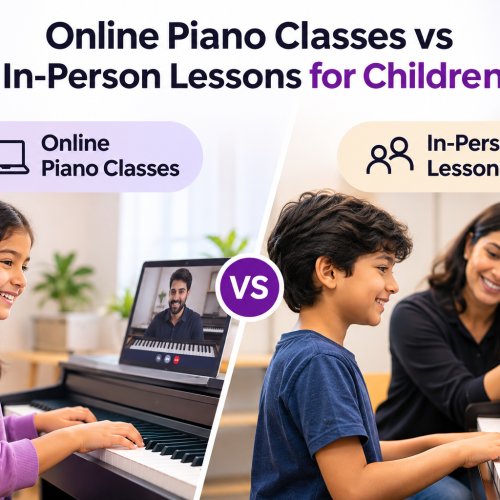
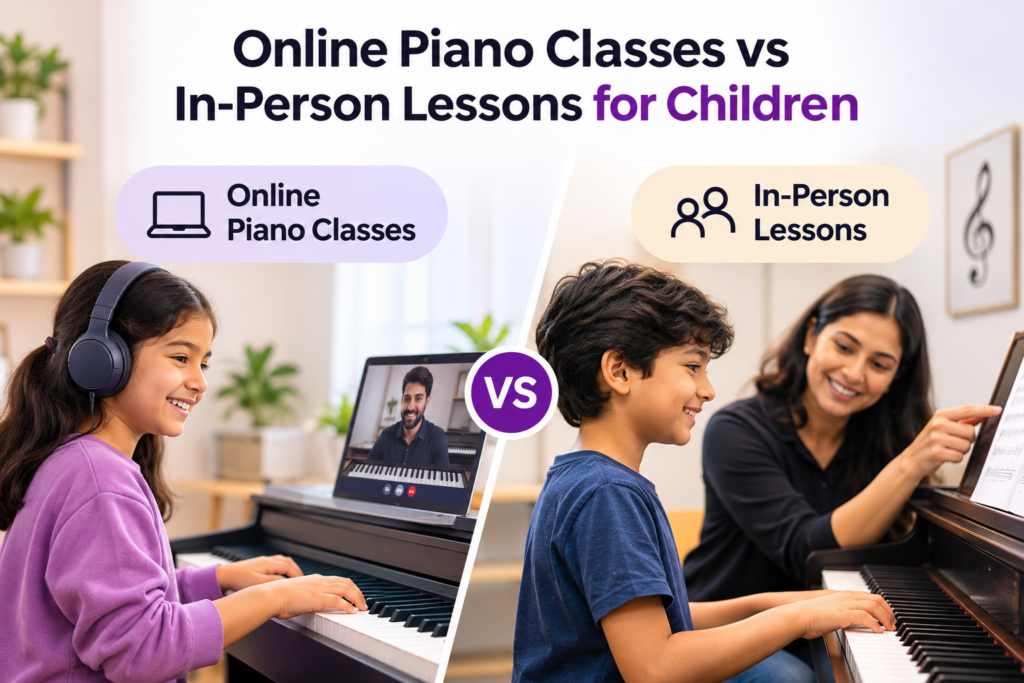
You want your child to learn piano, but you’re unsure whether to sign them up for in-person lessons or online sessions. This decision matters because it affects weekly routine, progress, motivation and, ultimately, whether your child keeps playing. Below is a practical comparison that helps parents decide between online piano classes and traditional face-to-face lessons for children aged roughly 6–13.
What this guide covers
Read on for a clear, evidence-informed look at: convenience and time costs; tutor quality and choice; learning outcomes and assessment; engagement, practice and motivation; technical requirements; and sensible rules of thumb for making the right decision for your child.
Pros and cons of online piano classes for children
Here are the typical advantages and disadvantages parents ask about when considering remote lessons.
Advantages
- Convenience: No commute means less time lost to travel and fewer schedule clashes with school activities.
- Larger teacher pool: You can select tutors who specialise in particular methods, exam boards or styles regardless of geography.
- Flexible scheduling: Online lessons often make it easier to find slots that fit busy family timetables.
- Comfortable learning environment: Some children concentrate better practising at home, especially younger learners who need more parental support.
Disadvantages
- Technical dependency: Video lag, poor audio or unsuitable instruments (digital vs acoustic) can interrupt teaching flow.
- Less physical presence: Teachers can’t physically guide posture or hand position; corrections must be verbal or shown on camera.
- Possible distractions: Home environments can include interruptions unless a quiet practice space is organised.
- Performance opportunities: In-person studios and schools often host more regular recitals or group events; parents should ask about these when choosing an online provider.
Pros and cons of in-person lessons (traditional piano lessons)
Advantages
- Direct physical guidance: Teachers can demonstrate hand shape, adjust seating and make small physical corrections in real time.
- Immediate performance experience: Studio recitals, class ensembles and local events are easier to access.
- Structured environment: The formality of attending a lesson outside the home can help children take lessons seriously.
Disadvantages
- Commute and time cost: Travel to lessons can add stress to the week and reduce practice time.
- Smaller teacher pool: Your choice is limited to teachers within commuting distance.
- Less scheduling flexibility: Changing lesson times is often more difficult with fixed studio hours.
How important are learning outcomes?
Parents often ask whether children learn faster or more reliably in-person. The short answer: quality of instruction, consistency of practise, and parental support matter more than delivery format. A skilled, engaged teacher—whether online or in-person—can deliver strong outcomes. Conversely, frequent cancellations, poor practise habits, or unsuitable teaching approaches limit progress regardless of location.
Key decision factors to weigh
Use these practical criteria to assess which option suits your child.
- Age and attention span: Younger children may benefit from shorter, highly engaging sessions and strong parental involvement. Online lessons can work well if the teacher uses engaging materials and the parent helps manage focus.
- Instrument access: Does your child have a suitable instrument at home? A full-size keyboard or piano with weighted keys gives the best transfer between lessons and practise.
- Teacher selection: If a specific method or tutor is important, online lessons broaden your options and increase the chance of a good match.
- Scheduling needs: If after-school activities or long commutes make regular attendance difficult, the flexibility of online lessons is a major advantage.
- Performance goals: If frequent in-person recitals or ensemble work are essential, check whether the chosen online programme organises virtual or local events.
Practical checklist for parents before you commit
Ask these questions to any provider—online or in person—before booking lessons.
- How long is a typical lesson, and is the lesson length appropriate for my child’s age?
- How are missed or rescheduled classes handled?
- Does the teacher provide a lesson plan or progress milestones?
- What technical setup is required for online lessons (camera angle, keyboard placement, headphones)?
- Are recital or examination opportunities offered?
When online piano classes make the most sense
Choose online lessons when your priorities include flexibility, access to specialists, or when commuting is a barrier. For families with busy schedules or those living away from urban teaching centres, remote lessons often deliver the best balance of quality and convenience.
When in-person lessons may be better
Consider face-to-face lessons if you want a very hands-on teacher who can physically correct posture, if there are frequent performance opportunities you want to join, or if your child thrives on the routine of leaving home for lessons.
How to tell if the current approach is working
- Short-term signs (4–8 weeks): Your child looks forward to lessons, completes practising tasks, and can show small but steady improvements.
- Medium-term signs (3–6 months): Repertoire grows, sight-reading or technical skills improve, and the teacher provides clear next steps.
- When to reassess: If progress stalls, lessons are often cancelled, or your child loses interest, it’s reasonable to trial a different teacher or delivery format.
Practical tips to get the most from online lessons
- Set up a quiet, well-lit practice area with the keyboard at a comfortable height and the camera angled to show hands.
- Use a stable internet connection and test audio/video before the first lesson.
- Ask the teacher for clear practice goals and short daily tasks to maintain momentum between weekly lessons.
- Arrange short parent check-ins after lessons for younger learners so you can support practise and follow the teacher’s guidance.
What to expect from a reliable online lesson provider
A trustworthy online programme will be transparent about lesson length, scheduling, and payment terms. For example, Sound Garage offers 60-minute 1-to-1 live online music classes and lists the instruments they teach, including Piano/Keyboard. Students pay for four classes at a time; the next payment becomes due after four completed classes, and missed or rescheduled classes do not count as completed classes. There is no long-term payment commitment beyond the current four-class cycle, and Sound Garage offers a free trial lesson.
If you want to explore a structured online option, see Sound Garage’s piano information here: online piano classes.
Recommended starting point for most parents
Begin with a short trial period—many providers offer a free or low-cost introductory lesson—then commit to a consistent block of lessons (for instance, enough to establish a weekly routine). Focus on finding a teacher who communicates clearly, sets achievable practise goals, and engages your child. If after a few months you’re not seeing steady progress or motivation, trial a different teacher or format.
Next step (gentle CTA)
If flexibility and a broad teacher choice matter to your family, trying a live online 1-to-1 lesson can be a low-risk way to assess fit. To learn more about live online options, including a complimentary trial, visit online piano classes.
Frequently asked questions
Can a child learn piano as well online as in person?
Yes. With a skilled teacher, clear practise goals and a reliable setup, children can make strong progress online. Parental support for younger learners helps improve concentration and practise consistency.
What equipment does my child need for online lessons?
A stable internet connection, a computer or tablet with a camera, and a keyboard or piano with suitable key action are the basics. A quiet, well-lit space and a simple tripod or laptop stand to aim the camera at the hands make lessons more effective.
How should I choose between a local teacher and an online tutor?
Decide by prioritising what matters most: if specialist style, scheduling flexibility or avoiding commute time are key, choose online. If you want frequent in-person recitals or hands-on correction, start with an in-person teacher.
How long before I should expect to see progress?
Look for small, measurable improvements within a month and clearer skill gains within three to six months. Consistent practise and regular lessons are the main drivers of progress.
Do online lessons provide recital opportunities?
Some online providers organise virtual recitals or partner with local centres for in-person events. Ask prospective teachers about performance opportunities when you enquire.
Making the right choice depends on your child’s personality, your family’s schedule and what you value most from lessons. Start with a short trial, set clear practise routines, and choose a teacher who keeps your child engaged—whether they teach online or in person.