Choosing the right online piano classes for a child involves more than simply finding a convenient lesson time. The teacher, lesson format, learning structure and approach to practice can all affect how a child experiences music and progresses over time.
With so many online piano lessons available, it can be difficult for parents to know what actually matters.
Here are the key things to consider when choosing online piano classes for kids.
Look at the Teacher, Not Just the Platform
The teacher is one of the most important parts of a child’s learning experience.
A good online piano teacher should be able to communicate clearly with children, demonstrate concepts effectively and adapt the lesson to the student’s current ability.
When comparing programs, look at:
• The teacher’s musical experience and qualifications
• Experience teaching children
• Whether lessons are live and interactive
• How the teacher gives corrections and feedback
• Whether the child works consistently with a teacher
• How the teacher communicates practice expectations
A strong teacher should be able to make the lesson understandable while also keeping the student engaged.
Consider Online Piano Classes in a Live 1-to-1 Format
Online music learning can take several forms, including recorded courses, group classes and live individual lessons.
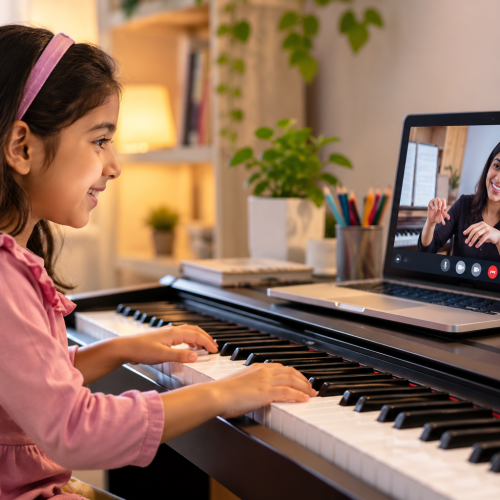
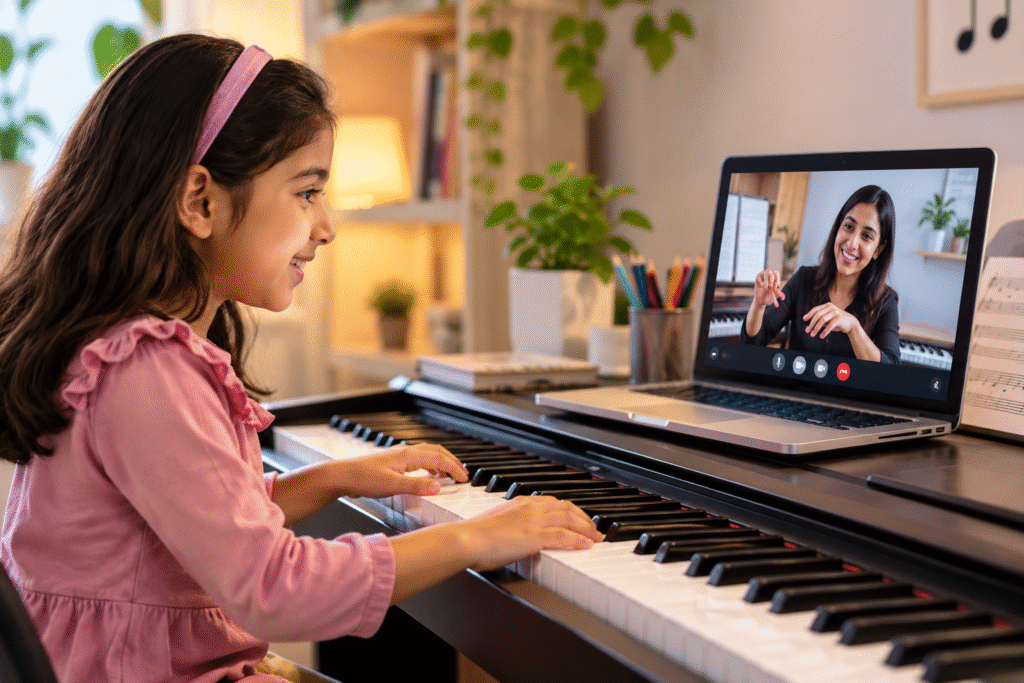
With a live 1-to-1 piano lesson, the teacher can see and hear the student while they play and respond immediately.
This allows the teacher to:
• Correct technique during the lesson
• Identify mistakes as they happen
• Adjust the pace of learning
• Answer questions immediately
• Choose exercises and repertoire appropriate for the student
For parents considering online piano lessons for kids, it is worth understanding exactly how much live interaction the program provides.
Look for a Structured Learning Path in Online Piano Classes
A good program should make it clear how the online piano classes are structured and how the student progresses over time.
Rather than simply learning one song after another, children can gradually develop several musical skills alongside their repertoire.
Depending on the student’s level and goals, these may include:
• Piano technique
• Music reading
• Rhythm
• Musical expression
• Repertoire
• Ear training
• Performance skills
A structured learning path also makes it easier for parents to understand what their child is working towards.
Choose a Program Appropriate for Your Child’s Level
A beginner needs something different from a student who has already been playing piano for several years.
For a beginner, the teacher may need to focus on fundamentals such as posture, basic technique, rhythm and reading music.
An intermediate or advanced student may need more challenging repertoire, technical development and more detailed musical interpretation.
When comparing piano classes for children, ask whether the program can adapt to the student’s existing level rather than following exactly the same path for everyone.
Understand What Your Child Will Learn in Online Piano Classes
Before enrolling, look beyond the list of songs included in a course.
Ask what musical skills the student will develop.
A well-rounded online piano education can involve:
Technique — developing control and coordination at the instrument.
Music reading — learning to understand and interpret written music.
Rhythm — developing accurate timing and rhythmic awareness.
Repertoire — learning and performing pieces at an appropriate level.
Musical expression — learning how dynamics, articulation and phrasing affect a performance.
Ear training — developing the ability to listen, recognise and respond to musical sounds.
The exact balance will depend on the student’s age, level and goals.
Consider How Much Practice Is Expected
Piano lessons are only one part of learning an instrument. Regular practice between lessons is important for developing and retaining new skills.
However, practice expectations should be realistic for the child’s age and schedule.
Ask the teacher:
• How much should my child practice?
• What should they practice between lessons?
• Will the teacher provide specific practice instructions?
• How will practice progress be reviewed?
A clear practice plan can make it easier for a child to develop a consistent routine.
Look for Progress Tracking and Feedback
The effectiveness of online piano classes also depends on what the student is expected to practice between lessons.
This does not mean receiving a report after every lesson. Rather, there should be a clear understanding of what the student is learning, where they are progressing and what they need to work on next.
Useful progress feedback can include:
• Skills currently being developed
• Pieces being learned
• Areas that need improvement
• Practice recommendations
• Longer-term learning goals
This is particularly useful with online piano lessons because parents may not always be able to judge their child’s technical progress themselves.
Consider Your Child’s Long-Term Goals
The right online piano classes should support the child’s goals as those goals develop over time.
Some may simply want to enjoy playing music. Others may eventually want to perform, develop stronger musicianship or prepare for graded examinations.
If examinations are part of your plans, ask whether the program can support structured exam preparation.
For example, Sound Garage offers Trinity-aligned learning and exam preparation as part of its Trinity programs.
The important thing is to choose a program that fits the child’s goals rather than assuming that every student needs to follow the same path.
Compare the Practical Details of Online Piano Classes
Once you have narrowed down your choices, compare the practical details.
Look at:
• Lesson duration
• Lesson frequency
• Scheduling flexibility
• Teacher availability
• Instrument requirements
• Fees
• Trial-class options
• Rescheduling policies
• How parents receive progress information
These details can make a significant difference to whether a music program fits comfortably into your family’s routine.
Take a Trial Lesson Before Committing
A trial lesson can tell you much more than a website description.
During the trial, observe how the teacher interacts with your child.
Ask yourself:
• Does my child feel comfortable communicating with the teacher?
• Is the lesson structured?
• Does the teacher explain things clearly?
• Does the teacher correct mistakes constructively?
• Is my child engaged?
• Does the teacher explain what should be practised afterwards?
The goal isn’t simply to determine whether the child can play something during the trial. It is to understand whether the teacher, teaching approach and learning environment are a good fit.
Frequently Asked Questions
Are online piano lessons suitable for beginners?
Yes. A beginner can learn piano online through live lessons when the teacher can see and hear the student clearly and adapt instruction to their level.
What age can a child start piano lessons?
There isn’t one universal starting age for every child. Readiness can depend on attention span, interest, ability to follow instructions and willingness to practice.
Are 1-to-1 piano lessons suitable for children?
Live 1-to-1 lessons allow the teacher to give individual attention and adapt the lesson to the student’s level, pace and needs.
How often should a child have piano lessons?
The appropriate frequency depends on the child’s goals, age, schedule and ability to practice between lessons. Consistency is generally more important than choosing a schedule that is difficult to maintain.
How much should a child practice between piano lessons?
Practice requirements vary according to age, level and goals. The teacher should provide realistic and specific guidance about what the student should practice.
Can children prepare for piano examinations through online lessons?
Yes. Online lessons can be used for structured examination preparation when the teacher and program are designed to support the relevant syllabus and examination requirements.
Final Checklist for Parents
Before choosing online piano classes, ask:
✓ Is the teacher experienced and qualified?
✓ Are the lessons live and interactive?
✓ Is the learning path structured?
✓ Is the program appropriate for my child’s level?
✓ Does it develop more than just song-playing?
✓ Is there a realistic practice plan?
✓ Will I receive useful progress feedback?
✓ Does the program fit my child’s long-term goals?
✓ Do the schedule and fees work for our family?
✓ Can we try a lesson before committing?
The right online piano class should give your child a structured way to learn, regular interaction with a teacher and a learning experience that can develop with them over time.
Ready to explore online piano lessons?
Sound Garage offers live 1-to-1 online piano lessons for children, with structured learning, experienced tutors and flexible scheduling.
Ready to try a lesson? Book a free trial class with Sound Garage.