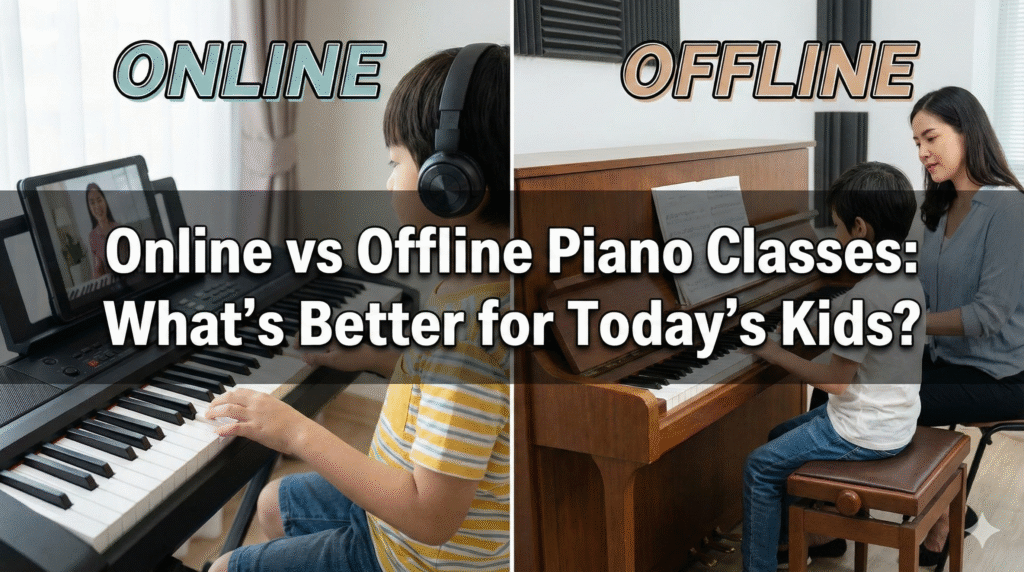
By Sound Garage • Updated 2025 • 8 min read
Introduction
If you’re considering piano lessons for your child, you’ve probably asked yourself:
“Should I choose online or offline classes?”
“Will online lessons be as effective as going to a physical class?”
“Which one will help my child learn better, faster, and more confidently?”
This is one of the most common questions parents ask us — especially Indian families living abroad in the UAE, UK, Canada, USA, or Singapore.
The truth is simple:
Both online and offline piano classes can work — but the best choice depends on your child’s learning style and your family’s lifestyle.
Let’s break it down clearly so you can make the best decision.
1. Convenience and Flexibility
Offline Classes
Travelling to a physical music school used to be the norm.
But it comes with challenges:
- Fixed timings
- Travel time
- Waiting outside the class
- Traffic delays
- Difficulty fitting into busy schedules
For many parents abroad, this becomes overwhelming.
Online Classes
Online lessons remove all these barriers.
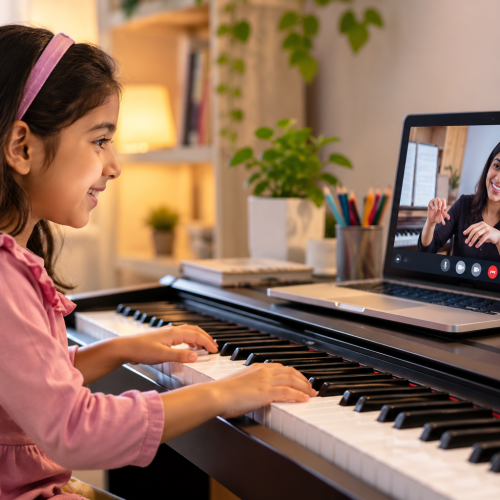
Your child learns from home at a convenient time, allowing you to:
- Avoid travel
- Save time
- Keep a predictable weekly routine
- Accommodate last-minute scheduling changes
For busy families, online learning often fits life much better.
Verdict:
Online is more flexible, easier to manage, and saves significant time.
2. Quality of Tutors
Offline Classes
You are limited to the tutors available in your area.
Sometimes the teacher is excellent — sometimes not.
And switching teachers can be difficult.
Online Classes
You can choose from a wider pool of qualified, Trinity-certified, performance-driven tutors — no matter where you live.
Geography doesn’t restrict your child’s access to great teaching.
At Sound Garage, every tutor is:
- Trinity-qualified
- An active performer or composer
- Experienced with children aged 6–13
- Young, energetic, and relatable
Children connect faster with tutors who understand their mindset — something online platforms do exceptionally well.
Verdict:
Online classes give you access to better-quality tutors, especially important for families abroad.
3. Learning Environment
Offline Classes
Classrooms are structured but may feel intimidating for some children.
Children may feel:
- Shy
- Pressured
- Distracted by other students
- Nervous to make mistakes
Online Classes
At home, children feel:
- Safe
- Comfortable
- Relaxed
- Open to learning
- More confident
Online classes create a warm, private learning environment where children can focus fully and learn at their own pace.
Verdict:
Children often learn better and feel more confident in online settings.
4. One-on-One Attention
Offline Classes
Many offline lessons have:
- Group settings
- Shared time
- Limited one-on-one focus
Even in “private” offline lessons, the environment may be rushed or distracted.
Online Classes
Online classes are usually 100% one-on-one, meaning:
- The tutor focuses entirely on your child
- Immediate feedback
- Personalized pace
- Customized pieces and techniques
- Clear weekly goals
This dramatically increases the effectiveness of each session.
Verdict:
Online clearly wins with consistent, personalised attention.
5. Focus and Concentration
Offline Classes
Travelling, waiting, and classroom distractions can affect focus.
Children may take time to settle.
Online Classes
Online lessons are structured, fast-paced, and interactive.
With fewer external distractions, children:
- Focus better
- Learn faster
- Retain more
- Respond more actively
The comfort of home reduces pressure and increases engagement.
Verdict:
Online fosters better concentration for most kids.
6. Parental Involvement and Visibility
Offline Classes
Parents usually wait outside and do not know:
- What happened in class
- How their child behaved
- What pieces were covered
- What the next goals are
Online Classes
You can:
- Observe sessions
- Track progress
- Stay aware of weekly targets
- Support practice at home
- Understand your child’s journey deeply
This level of involvement builds trust and clarity.
Verdict:
Online keeps parents more informed and involved.
7. Safety and Comfort
Offline Classes
Travelling, unfamiliar locations, and external environments can feel stressful.
Online Classes
Children remain at home in a familiar, safe setting.
This is especially reassuring for:
- Younger children
- Introverted kids
- Families living abroad
- New learners
Verdict:
Online feels safer and more comfortable for young children.
8. Cost and Value
Offline Classes
Costs may include:
- Monthly fees
- Travel expenses
- Material costs
- Additional exam prep sessions
Online Classes
You pay only for the class — and receive:
- One-on-one focus
- Trinity preparation
- Tutor flexibility
- Online resources
- Progress tracking
- Recordings (if provided)
Verdict:
Online offers stronger value for the quality delivered.
So Which Is Better? Online or Offline?
The answer depends on what you want for your child.
Choose offline if:
- You want physical interaction
- You live close to a high-quality music school
- Your child thrives in a classroom setting
Choose online if:
- You want access to excellent tutors
- You want structured Trinity-based learning
- You prefer flexibility
- You want a safe, comfortable environment
- Your child is shy, introverted, or easily overwhelmed
- You are living abroad and want continuity
For most modern families — especially Indian families abroad — online piano classes offer more convenience, better quality, and faster progress.
Why Families Choose Sound Garage for Online Piano Lessons
At Sound Garage, children receive:
- One-on-one attention
- Trinity-certified tutors
- Structured grade-wise progress
- Monthly performance practice
- A fun, modern learning experience
- Warm, friendly teacher-student connection
Children don’t just learn piano — they build confidence, creativity, and discipline.
Parents consistently tell us:
“My child has become more focused.”
“My child’s confidence has grown tremendously.”
“Our daughter connects beautifully with her tutor.”
“We’ve seen more progress online than in offline classes.”
Ready to See Which One Your Child Prefers?
The easiest way to decide is to let your child experience an online class.
You’ll know within minutes whether it’s the right fit.
You can try a free demo class — no pressure, no obligation.
Suggested Related Articles
- Trinity Piano Classes Online
- How Music Boosts Confidence and Focus
- Finding Quality Music Education Abroad
About Sound Garage
Sound Garage is an online music school founded by performers, composers, and Trinity-certified musicians.
We help children aged 6–13 across the world learn piano, keyboard, guitar and vocals with confidence, creativity, and joy.